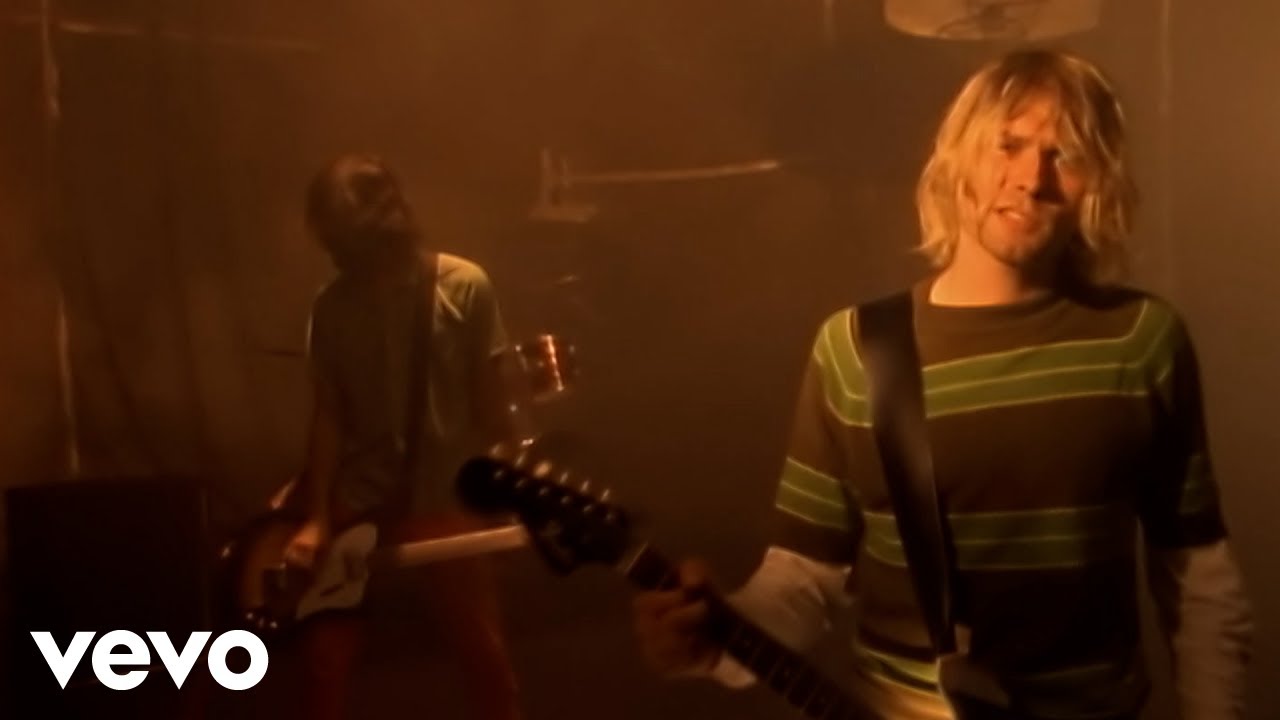
On August 17, 1991, a first-time music video director walked into Stage 6 at GMT Studios in Culver City, California, and filmed something that would rearrange the landscape of popular music.
Samuel Bayer had never directed a major music video before. The concept he and the band developed was deceptively simple: a high school pep rally in a gymnasium that gradually descends into anarchy. Students sit on bleachers looking bored. Cheerleaders wear black dresses with Circle-A anarchist symbols. A janitor named Tony De La Rosa dances with his broom. The band plays. And then everything falls apart.
The visual references were deliberate — the 1979 film Over the Edge and Rock 'n' Roll High School both informed the look and feel of teenage rebellion contained within institutional walls.
The budget was modest, reported between 30,000 and 50,000 dollars. Extras spent hours seated on bleachers through repeated takes, growing genuinely restless. Kurt Cobain eventually convinced Bayer to let them out of their seats and into the pit. What followed was real chaos — by the end of the shoot, the set was destroyed and band equipment was wrecked.
That unscripted energy made it into the final cut, and it showed. When MTV began playing the video in heavy rotation, the effect was transformative. Former MTV executive Amy Finnerty later said it changed the look and direction of the network, targeting a new generation and turning alternative rock into a mainstream cultural force.
"Smells Like Teen Spirit" peaked at number six on the Billboard Hot 100 and topped charts in multiple countries. More importantly, it drove Nevermind to number one on the Billboard 200 in January 1992 — displacing Michael Jackson's Dangerous — and marked grunge's arrival as a commercial phenomenon.
At the 1992 MTV Video Music Awards, the video won Best New Artist in a Video and Best Alternative Video. Rolling Stone ranked it number two on their 1993 list of the greatest music videos.
Bayer went on to direct hundreds of videos and commercials, but nothing he made afterward carried quite the same charge. The gymnasium, the cheerleaders, the moment the crowd breaks free — it captured something that was already happening in the culture and gave it a visual form that MTV couldn't stop broadcasting.
Watch the video