In November 1975, Queen faced a practical problem: how do you promote a six-minute rock opera on Top of the Pops when the song is far too complex to mime convincingly? The answer changed music forever.
The song itself had already been a monumental studio effort. Recording spanned three weeks across five studios — starting at Rockfield and continuing at Roundhouse, SARM, Scorpio, and Wessex — far longer than a typical single. The opera section alone required around 180 vocal overdubs, with Freddie Mercury, Brian May, and Roger Taylor spending ten to twelve hours each layering harmonies onto 24-track tape that had to be bounced repeatedly to make room for more. No synthesizers were used — the operatic middle section was built from voices backed by piano, bass, drums and timpani.
When it came time to promote the single on BBC's Top of the Pops, the band opted for a filmed clip that could air in their place.
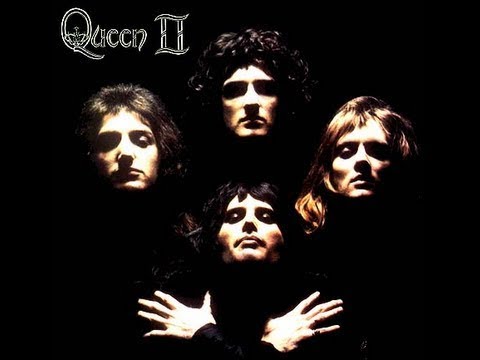
Director Bruce Gowers shot the entire video at Elstree Studios in Hertfordshire on November 10, 1975. The shoot took just four hours and cost £4,500. The iconic diamond formation shot, with Mercury, May, John Deacon, and Roger Taylor arranged side by side, was achieved using camera techniques including a multi-facet prism lens and video feedback effects that split and multiplied their faces into kaleidoscopic patterns. The composition was inspired by the Queen II album cover.
The video was edited within five hours and sent to the BBC as soon as it was finished.
The video premiered on Top of the Pops on November 20, 1975, and the impact was immediate. "Bohemian Rhapsody" entered the UK Singles Chart and spent nine weeks at number one — the first record to do so since Paul Anka's "Diana". In the United States it peaked at number nine.
Queen's video was not the first promotional music clip ever made — the Beatles, Bob Dylan, David Bowie, and ABBA had all produced filmed performances before it. But it was only after the success of "Bohemian Rhapsody" that record companies began routinely making promotional videos for singles.
The song's second life came in 1992, when the headbanging scene in Wayne's World introduced it to a new generation. In the US, the single climbed to a new peak of number two. After Freddie Mercury's death in November 1991, the re-released single spent a further five weeks at number one, bringing its total to fourteen non-consecutive weeks at the top of the UK chart.
On YouTube, the original video passed one billion views in July 2019, boosted further by the Bohemian Rhapsody biopic that had premiered the previous year — a film that grossed over 900 million dollars worldwide.
All of it traces back to four hours in a studio, a prism lens, and a band that couldn't figure out how to mime a six-minute opera on live television.
Watch the video