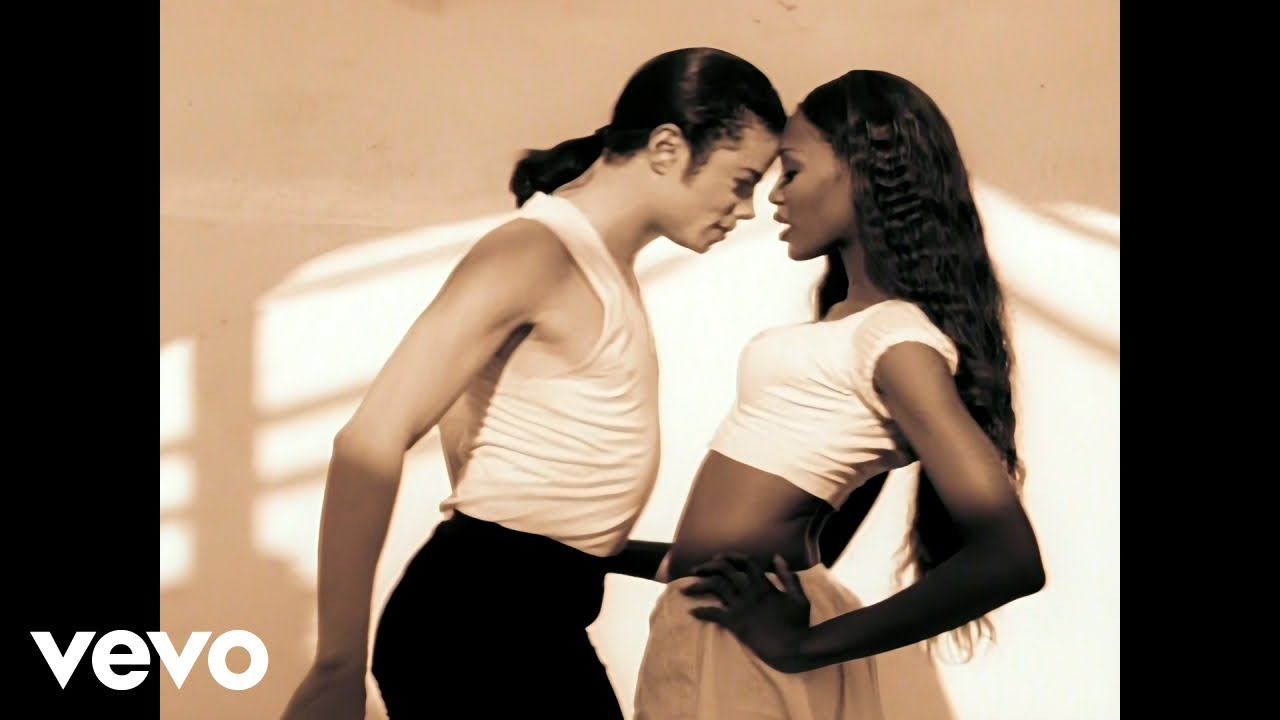
By the spring of 1992, a Michael Jackson video was an event. Black or White had premiered on television in dozens of countries at once the previous November. Remember the Time had sent him to ancient Egypt with Eddie Murphy and Magic Johnson. The next one had no story, no crowd and almost no set. "It's not about outrageous sets and 50 dancers," said the man who made it. "It's really about bringing Michael's energy out in a new way."
That man was Herb Ritts, and three years earlier he had not considered himself a director at all. He was a photographer — black and white, bodies in hard light, portraits of the most famous faces in fashion and film. It was Madonna who talked him into moving pictures. He shot her Cherish in 1989, operating the camera himself, and followed it with Janet Jackson's Love Will Never Do (Without You) and Chris Isaak's Wicked Game. By 1992 he had a style that needed no explanation: two people, a lot of skin, an empty landscape and a camera that stayed close.
The song had its own history before Ritts arrived. Jackson wrote and produced it with Teddy Riley, the architect of new jack swing, whom he had brought in to give the Dangerous album a sharper, more contemporary sound. Riley later described how the track began with Jackson's own vocal ideas, sung into a dictaphone. At one stage it was meant to be a duet with Madonna. She told Jonathan Ross in October 1992 that Jackson had played her an unfinished track he wanted to call In the Closet, that she had written ideas for it, and that he did not like them. She suspected all he really wanted was a provocative title.
The female voice that ended up on the record belonged to someone nobody guessed. The breathy spoken part is credited only to "Mystery Girl", and it was Princess Stéphanie of Monaco, whose identity was kept quiet until later. She does not appear in the video. On screen, the lines come from Naomi Campbell's mouth.
Campbell almost said no. By her own account, Jackson called her himself while she was committed to thirty fashion shows in Paris, and she told him she could not break those bookings. His answer was to offer to pay out the shows so she could come and make the video. She has described the shoot as playful, and Jackson as a perfectionist who knew exactly how he wanted every image to look.
They filmed at the Salton Sea in California's desert, and Ritts shot it in sepia. What happens on screen is barely a narrative. Jackson and Campbell circle each other in the heat, touch, pull away and come back, in a dance that works as a courtship. There is no ensemble and no special effect, and at times there is very little music video in the usual sense at all — just two figures and the camera of a man who had spent years learning how to photograph them.
For Jackson it was a real departure. His videos had sold stories, fantasy and spectacle; this one sold presence, and an adult sexuality he had rarely put on screen. Not everyone was comfortable with it. According to Jackson's own estate, the video was banned in South Africa for its content. The single, released in April 1992, reached number 6 on the Billboard Hot 100 and number 8 in Britain.
Later critics took it seriously. When Rolling Stone ranked Jackson's videos in 2014, it placed In the Closet eleventh and called it the most sexually charged performance of his career. It also fits a pattern that runs through his whole videography: Jackson kept handing his image to people from outside the music video business — John Landis, Martin Scorsese, Spike Lee, John Singleton — and trusting them to see him differently. Ritts saw him the way he saw everyone he photographed. At the height of the Dangerous era, he made a video with two people in it.
Watch the video