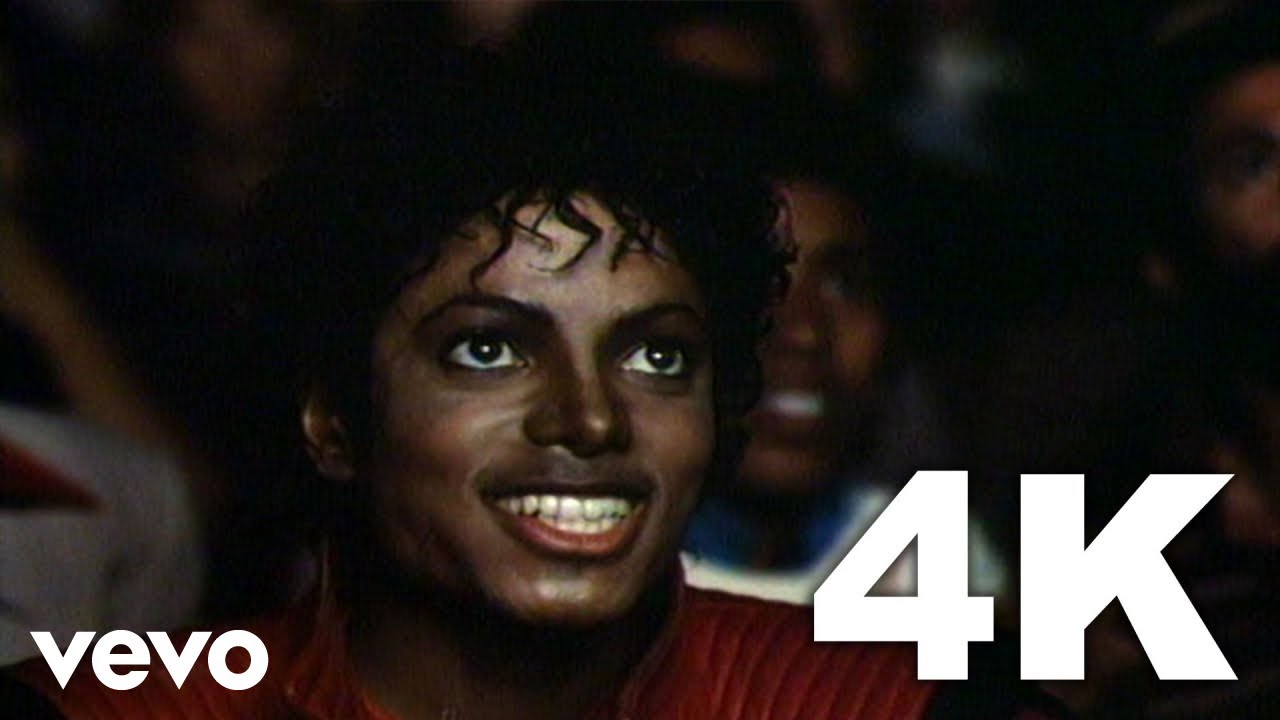
On December 2, 1983, MTV aired something that had never been seen before — a fourteen-minute horror film disguised as a music video. Michael Jackson's "Thriller" didn't just change what a music video could be. It changed what a pop star could demand.
The idea was Jackson's own. A lifelong movie fanatic, he wanted to make a short film — not a promotional clip — built around the horror imagery in Rod Temperton's lyrics. After watching An American Werewolf in London, Jackson reached out to its director, John Landis, and the two developed a script that wove werewolf and zombie sequences into a theatrical narrative.
The problem was money. Epic Records was initially reluctant to fund it, believing the Thriller album had already peaked. So Landis and Jackson struck a deal: they would produce a making-of documentary and sell the rights to MTV and Showtime, helping cover a total budget of around 500,000 dollars — roughly ten times what a typical music video cost at the time. The Making Michael Jackson's Thriller documentary went on to sell a million copies on VHS. Both Jackson and Landis deferred their fees to make it happen.
Filming took place across Los Angeles over several weeks. The Palace Theater provided the exterior for the movie-date opening. The zombie scenes were shot on the streets of East LA, around Union Pacific Avenue and South Calzona Street. The house scene used the Victorian at 1345 Carroll Avenue. Choreographer Michael Peters — who had already created the knife-fight routine for "Beat It" — designed the synchronized zombie dance with a cast of roughly twelve to sixteen undead dancers. Peters himself performed as one of the standout zombies, wearing a torn suit. Rehearsals stretched over days, demanding absolute precision from dancers in full prosthetic makeup through Los Angeles heat.
The makeup effects were led by Rick Baker, the Oscar-winning artist behind the werewolf transformation in Landis's earlier film. Jackson's own werewolf prosthetics — the extending snout, the yellow contact lenses — required three to six hours per application session, using foam latex, hand-laid hair, and airbrushing. Baker also designed the skull-outlined zombie makeup for the dance sequence, drawing visual cues from Phantom of the Opera.
The video's leading lady, Ola Ray — a 1980 Playboy Playmate — was cast after an open audition. She had a brief acting career afterward.
Then there was Vincent Price. His iconic spoken-word outro was reportedly recorded in just two takes.
The cultural impact was immediate and enormous. MTV's premiere of the full video doubled Thriller album sales in the months that followed, pushing it past twenty million copies. While "Billie Jean" had earlier broken MTV's unofficial racial barrier, "Thriller" cemented the change — proving that Black artists could not only appear on the network but dominate it. The video won multiple MTV Video Music Awards and established a new standard: that a music video could be a work of cinema.
In 2009, "Thriller" became the first music video inducted into the Library of Congress National Film Registry, recognized as culturally, historically, and aesthetically significant. Deborah Nadoolman's red leather jacket became one of pop culture's most recognizable costumes. The zombie dance has been recreated in flash mobs on every continent.
Jackson set out to make a short film, and he succeeded. Nearly everything about modern music video production — the budgets, the ambition, the idea that a video could be an event — traces back to those fourteen minutes.
Watch the video