Mark Romanek did not wait to be asked.
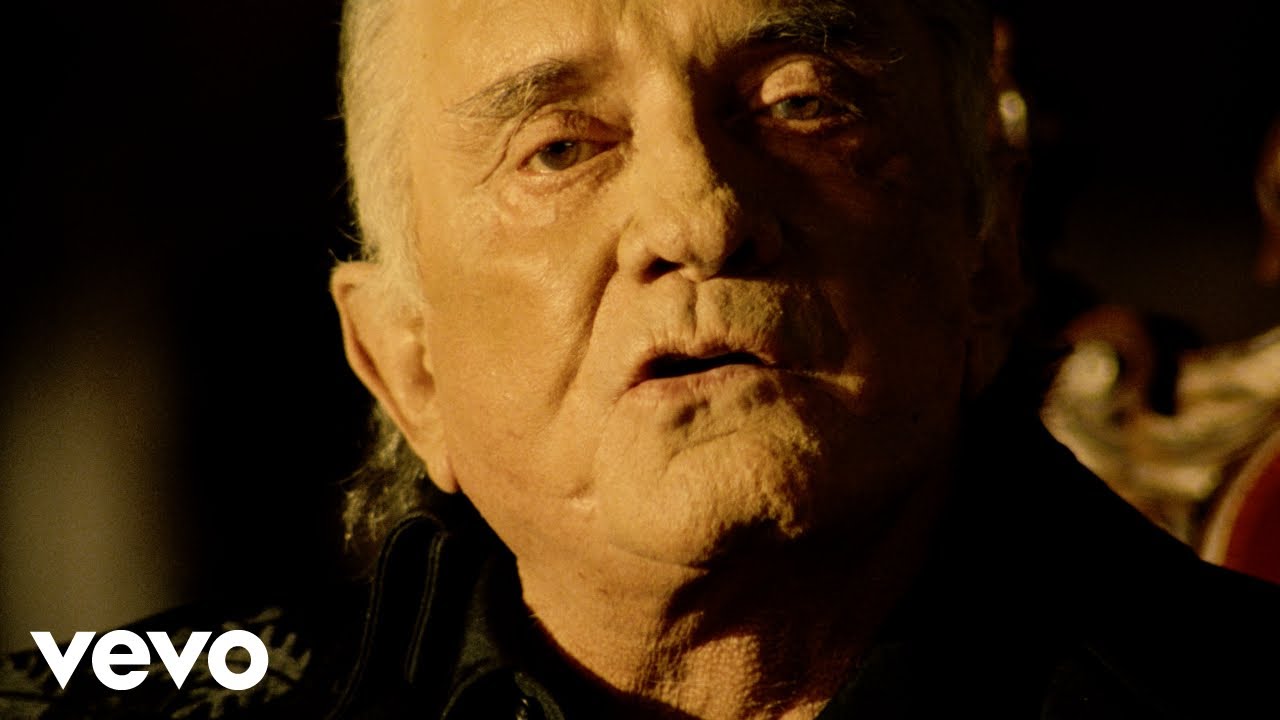
He offered, according to the same interview in Dave Urbanski's book The Man Comes Around, to shoot the video for free. By early 2003 he was, according to those around him, visibly frail, struggling with his eyesight, often in a wheelchair for longer journeys, and subject to frequent hospitalizations. Cash's health was declining, and he was unwilling to stay long in the cold Tennessee weather, which left Romanek racing against time. The plan was to shoot fast, close, and candid.
Romanek has said the museum "had been closed for a long time" and was "in such a state of dereliction" that it gave him the idea to be extremely candid about the state of Cash's health. Water damage, reported in several retrospectives, had further weathered the interior. It was closed and in disrepair, but the property was not sold until 2007, by the family rather than a bank.
Jean-Yves Escoffier, the cinematographer, shot Cash's face and the cluttered museum surfaces in tight, unglamorized close-up — the documentary texture Romanek wanted.
The material that populates the frame came from two places: new footage, and archival material from Cash's past. During location scouting, Romanek found the House of Cash closed and derelict, its contents left in a state of decay.
She neither sings nor addresses the camera. In May 2003, three months after the shoot, she underwent heart surgery and died from complications on May 15. Johnny Cash died on September 12 of the same year, from complications of diabetes.
Trent Reznor, whose song this was, has described his early reaction as conflicted. He was flattered by the cover, but worried that it could come off as a gimmick. When he first heard Cash's version without seeing the video, Reznor has said, something felt wrong — in his own phrasing, the recording "sounded alien," a personal song in an unfamiliar voice. His position shifted when he saw Romanek's finished video. In an Alternative Press interview widely paraphrased since, Reznor is reported to have said something to the effect that the song no longer really belonged to him — that it was Cash's now, and he had simply written it. The exact wording of that remark varies across citations; it should be treated as an established paraphrase rather than a verbatim quote.
Video of the Year went to Missy Elliott's "Work It." Justin Timberlake, accepting Best Male Video at the same ceremony, is widely reported to have said that the award should have gone to Johnny Cash.
At the Grammy Awards in February 2004, "Hurt" won Best Short Form Music Video. Cash had died five months earlier.
The video's critical afterlife has been unusually sustained. NME ranked it the greatest music video of all time in a 2011 poll. Rolling Stone placed it second in a 2021 retrospective of the same kind. Romanek — already the director of "Closer," "Scream," "Criminal," and the 2002 Robin Williams feature One Hour Photo — went on to shoot Jay-Z's "99 Problems" the following year and Never Let Me Go in 2010. The video runs a little over three and a half minutes. It is still, by most accounts, the nearest thing the form has produced to an autobiographical final statement.
Watch the video