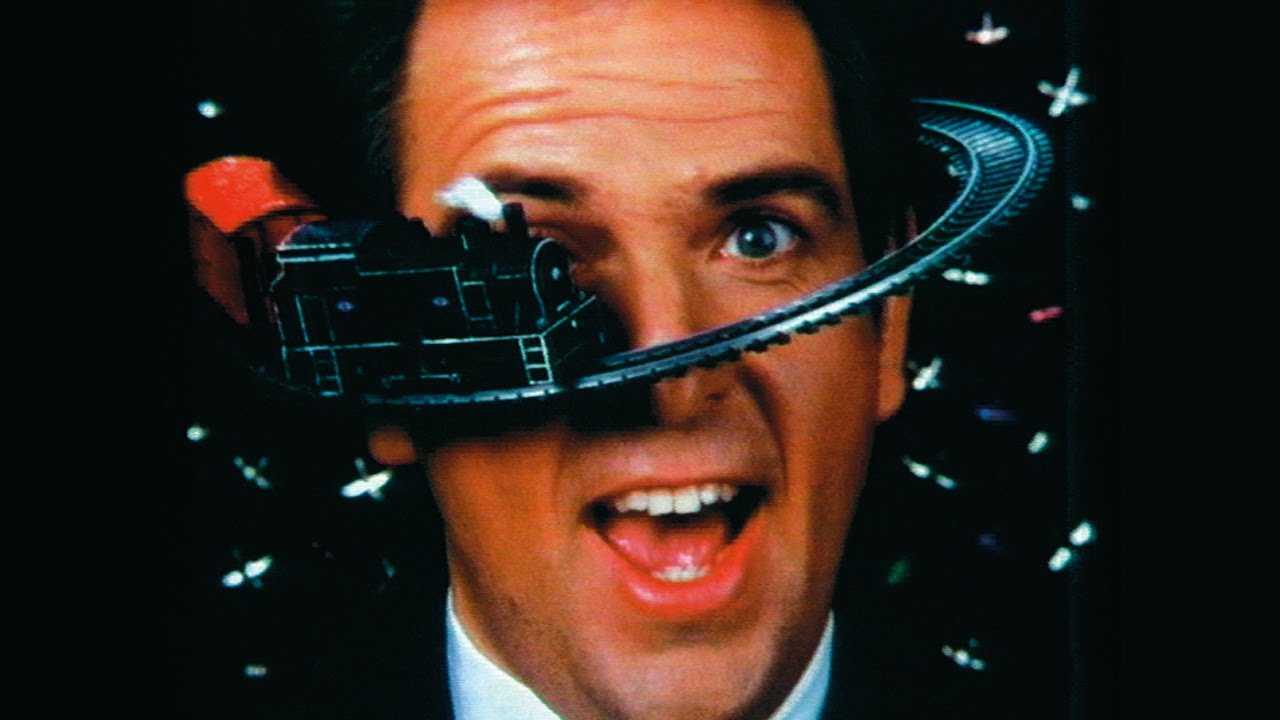
For sixteen hours, Peter Gabriel lay motionless under a sheet of glass while animators placed raw fish, fruit, and paint on his face, moving each object a fraction of an inch between frames. The result was one of the most celebrated music videos ever made.
The concept came from Gabriel and director Stephen R. Johnson, who spent a couple of weeks brainstorming ideas. Their goal was a video packed with inventive, surreal details that would reward repeat viewings — every frame a small visual joke or surprise. Commissioned by Tessa Watts at Virgin Records, with Adam Whittaker producing, the project became an unusually ambitious collision of animation styles.
The production used claymation, pixilation, stop-motion, and model animation, all shot painstakingly frame by frame. For the opening cloud sequence — just ten seconds of screen time — Gabriel lay under glass while painted clouds were manipulated across his face one frame at a time. The physical toll was considerable. Gabriel later joked that anyone trying to copy the approach would quickly discover how miserable the process actually was.
Several animators and studios brought the video to life. The Brothers Quay contributed experimental stop-motion sequences. Nick Park and Aardman Animations — years before Wallace and Gromit would make them famous — created the claymation middle section, including the iconic dancing chickens during the flute solo: two headless, featherless Plasticine models brought to life through pure stop-motion craftsmanship. The Plasticine face sequences were a collaborative effort, with Park refining techniques he would later use to transform British animation.
The technical approach was groundbreaking not for its polish but for its visible imperfections. The fingerprints in the clay, the slightly jerky movements, the tactile quality of real objects being physically manipulated — all of it synced to the rhythm of the music in a way that made the labor itself part of the art. The video is widely regarded as one of the most inventive uses of animation in the music video format.
At the 1987 MTV Video Music Awards, the video set a record that still stands: nine wins in a single ceremony. It took Video of the Year, Best Male Video, Best Concept Video, Best Direction, Best Art Direction, Best Editing, Best Special Effects, Best Overall Performance, and Most Experimental Video.
The song matched the video's success. "Sledgehammer" reached number one on the Billboard Hot 100 — Peter Gabriel's only US chart-topper — and peaked at number four in the UK. It propelled his album So to multi-platinum sales, with the video and MTV's heavy rotation helping to broaden Gabriel's audience well beyond his art-rock following.
The video drew partly on Johnson's earlier work with Talking Heads, particularly "Road to Nowhere," but pushed the techniques to a new level of ambition. Its influence can be traced through decades of hybrid animation in music videos, commercials, and film — and through Nick Park's own career, for whom the dancing chickens were an early showcase of the Plasticine animation style that would define Aardman's future.
Gabriel endured raw fish, trains emerging from his mouth, and flowers blooming across his face, all in the name of making something nobody had seen before. He succeeded.
Watch the video