Peter Buck sat in front of the television one evening, mandolin in hand, teaching himself the instrument by playing along to whatever flickered across the screen. His fingers stumbled through a circular pattern, over and over, until muscle memory took hold. He didn't think much of it at the time. Later, when the band reviewed practice tapes, that riff jumped out — a hypnotic, insistent loop that felt different from anything they'd done before.
Michael Stipe heard the recording and disappeared with it. Within an hour, he returned with lyrics about the ache of unspoken longing, the way desire can consume without ever being acknowledged. The phrase "losing my religion" wasn't about faith slipping away. In the South, where Stipe grew up, it meant something closer to coming undone — losing your grip, your composure, the careful control you keep over what you feel.
At Bearsville Studios in Woodstock, the band tracked the song with the mandolin leading the way, giving their electric guitar sound an unexpected folk texture. They called the whole thing a lucky break, the kind of accidental discovery that only happens when you're not trying too hard.
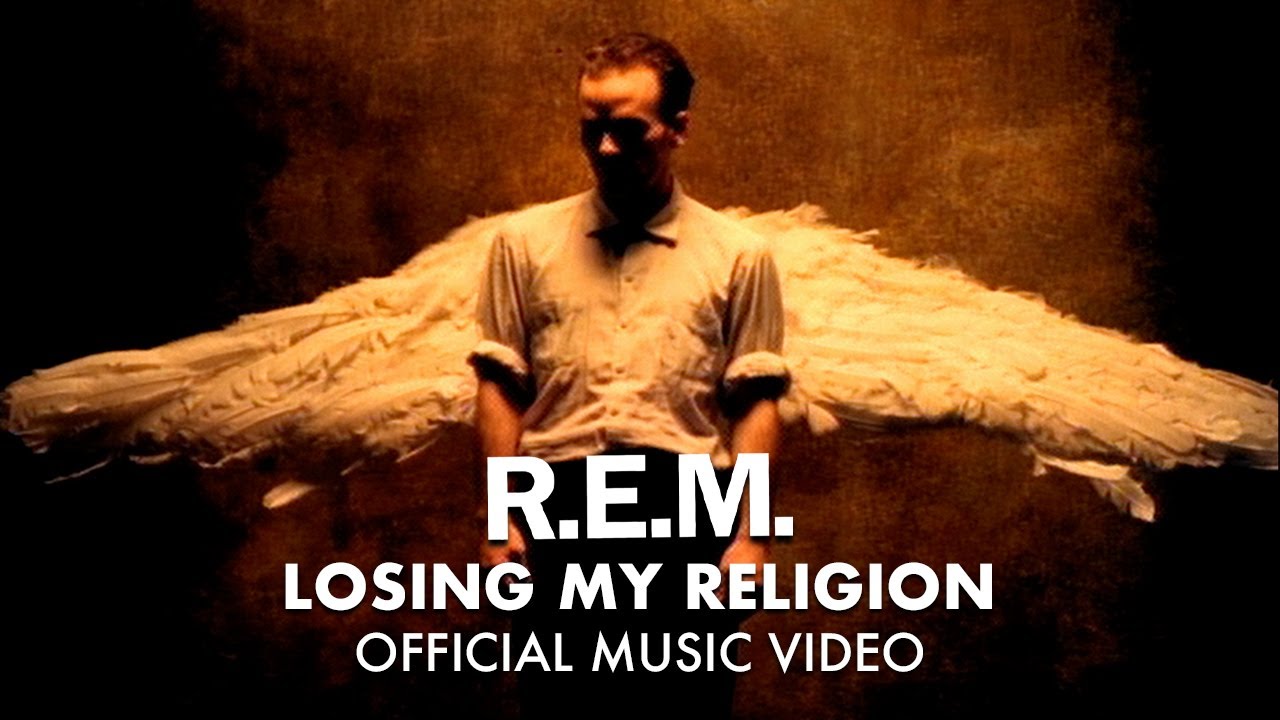
Director Tarsem Singh saw the song as a visual puzzle. He pulled from Caravaggio's chiaroscuro, from classical paintings of suffering and devotion, and built scenes around Stipe performing small, obsessive gestures — reaching, falling, repeating. The color palette glowed like old canvas, warm and slightly unreal. Singh wasn't illustrating the lyrics so much as mirroring their emotional architecture: the way longing circles back on itself, the way we perform our private desperation in rooms no one else can see.
Watch the video