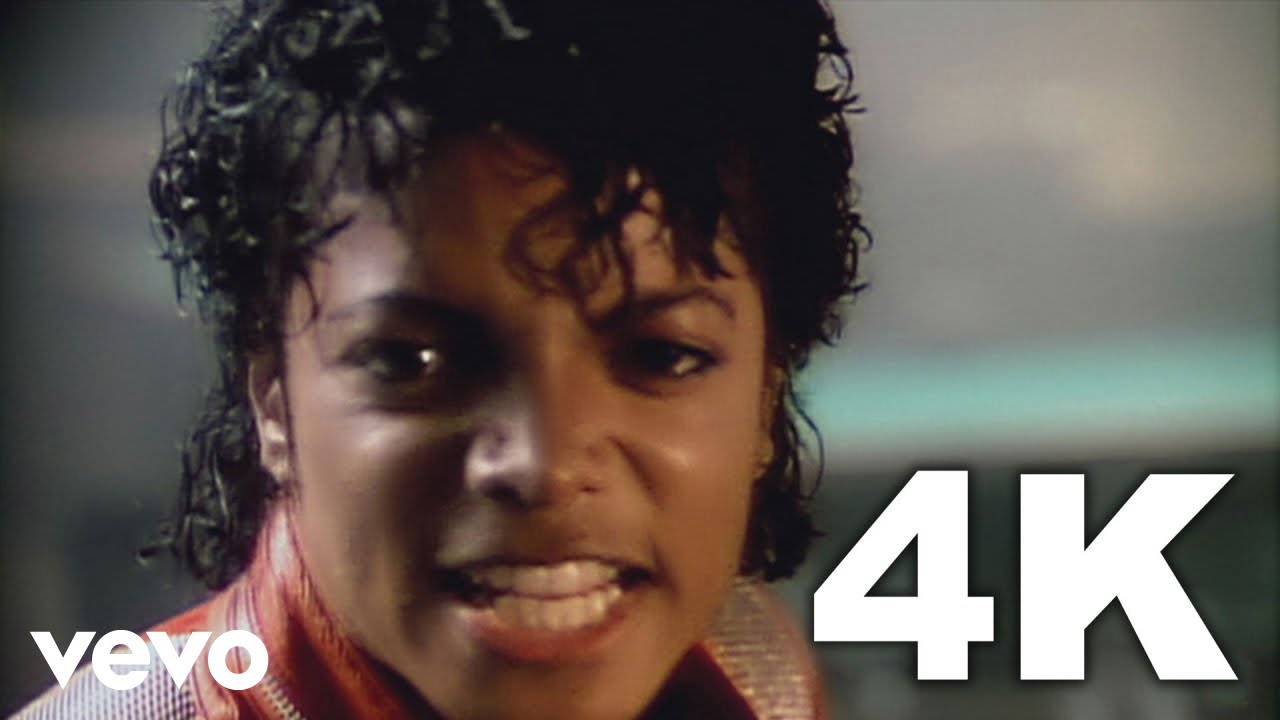
"Beat it" means get out of there. The song is about street violence, and the advice in the title is to walk away from the fight. Michael Jackson explained it himself in his 1988 autobiography, Moonwalk: "To me true bravery is settling differences without a fight and having the wisdom to make that solution possible."
The song exists because Quincy Jones heard something missing from Thriller. Looking back in 2009, Jones put it this way: "I told Michael that we needed a black rock 'n' roll tune — a black 'My Sharona.'" Jackson's own aim, as he described it, was a rock song he would buy himself, and one that schoolchildren would enjoy.
For the guitar solo, Jones picked up the phone and called Eddie Van Halen, who at first assumed the call was a prank. Van Halen played for nothing, and he did more than solo: he rearranged the middle section of the song before he played over it, and when Jackson heard the changes, he approved. Later, when tape edits threw the parts out of sync, Steve Lukather and Jeff Porcaro of Toto re-cut the basic tracks around Jackson's vocal and Van Halen's solo. Studio legend has it that the solo was so hot it set a speaker on fire, and Jones did remember flames. The engineer Matt Forger remembered it differently: an amplifier failed, and a speaker glowed red and smoked.
After Billie Jean, Jackson wanted his next video to act the song out: one gang against another. He gave the job to Bob Giraldi, a director of television commercials who had never made a music video. Giraldi has said it was a commercial he made for WLS-TV in Chicago, about an elderly blind couple, that had impressed Jackson. Giraldi, who grew up in Paterson, New Jersey, pictured the song as a rumble. The most memorable image — two gang leaders fighting with switchblades, their wrists tied together — came from a story he had heard while working in a factory. Critics compared the video to West Side Story. Giraldi said that was not where it came from.
Jackson added the condition that made the shoot famous: he wanted real gang members. Members of the Crips and the Bloods were brought in — through the Los Angeles police's gang unit, Giraldi believed — and police officers were on set. Time magazine called the result a "$150,000, five-minute West Side Story" with "a cast of 80 gang members (most of them real Los Angeles street dudes)."
They filmed in March 1983 on Los Angeles's Skid Row, mostly along East Fifth Street, with scenes in a diner, a pool hall, an alley and a warehouse. The first night was tense enough that the police nearly shut the shoot down, and Giraldi's answer was to bring the dancing forward in the schedule. The gang members, by Giraldi's account, couldn't dance. They formed a circle and watched while the professional dancers worked. Sylvie Simmons, reporting from the set for Creem, noted that Jackson got his turn in the warehouse at three in the morning, and that dawn was breaking by the time they finished.
Michael Peters, who choreographed the video, also played one of the two knife-fighting leaders; the dancer Vincent Paterson played the other. The story on screen is simple. Jackson, in a red leather jacket, breaks up the knife fight between the two leaders and turns the rumble into a dance that both gangs join.
The video premiered on MTV on March 31, 1983. On April 30, Beat It reached number one on the Billboard Hot 100, where it stayed for three weeks; in Britain it peaked at number three. In February 1984 it won the Grammy for Record of the Year and for Best Rock Vocal Performance, Male. The video won two American Music Awards and five of Billboard's own video awards.
"Weird Al" Yankovic's parody Eat It restaged the diner, the standoff and the dance almost shot for shot in 1984, with Jackson's approval. Jackson returned to street gangs and dance in Bad, Martin Scorsese's short film from 1987, where a showdown with his old friends in a subway station turns into a dance. And in 2026, the biopic Michael dramatized his decision to put real gang members in front of the camera.
The idea has outlived its moment because it is the song's argument turned into pictures. In a video full of switchblades, the bravest person on screen is the one who walks into the fight and refuses to have it.
Watch the video